Every growing business has faced this moment.
You approach a supplier with a specific requirement — a custom part, a modified enclosure, a limited production run, or a complex design — and the response comes back: “It’s not possible.” Or worse: “Minimum order is 5,000 pieces.” Or “Tooling alone will cost more than your entire project budget.”
For companies operating in competitive markets, hearing “no” is more than frustrating — it delays innovation, increases costs, and sometimes kills great ideas before they reach the market. But today, businesses are no longer limited by traditional manufacturing constraints. With professional 3D printing services, what was once considered impossible becomes practical, affordable, and achievable.
Why Traditional Suppliers Say “No”
Conventional manufacturing methods such as injection molding, CNC machining, or die casting are built for scale. They are highly efficient when producing thousands of identical parts. However, they struggle with:
- Complex geometries
- Low-volume production
- Frequent design changes
- Customization
- Tight development timelines
Tooling costs alone can make small or experimental projects financially unrealistic. If a part requires a mold, that mold must be created before production begins — and that process is both time-consuming and expensive.
This is why many suppliers reject projects that are too complex or too small to justify their setup costs.
The Freedom of Design Without Tooling Constraints
3D printing removes one of the biggest barriers in manufacturing: tooling. There are no molds to create, no dies to cut, and no minimum quantities required.
This means businesses can:
- Produce one unit or one hundred
- Create intricate internal structures
- Combine multiple components into a single part
- Modify designs quickly without restarting the entire process
Instead of adapting your design to match a supplier’s limitations, the production method adapts to your design.
For companies exploring 3d printing in Dubai, this flexibility has opened new opportunities in product development, engineering, architecture, retail displays, and industrial applications.
Solving Complex Geometry Challenges
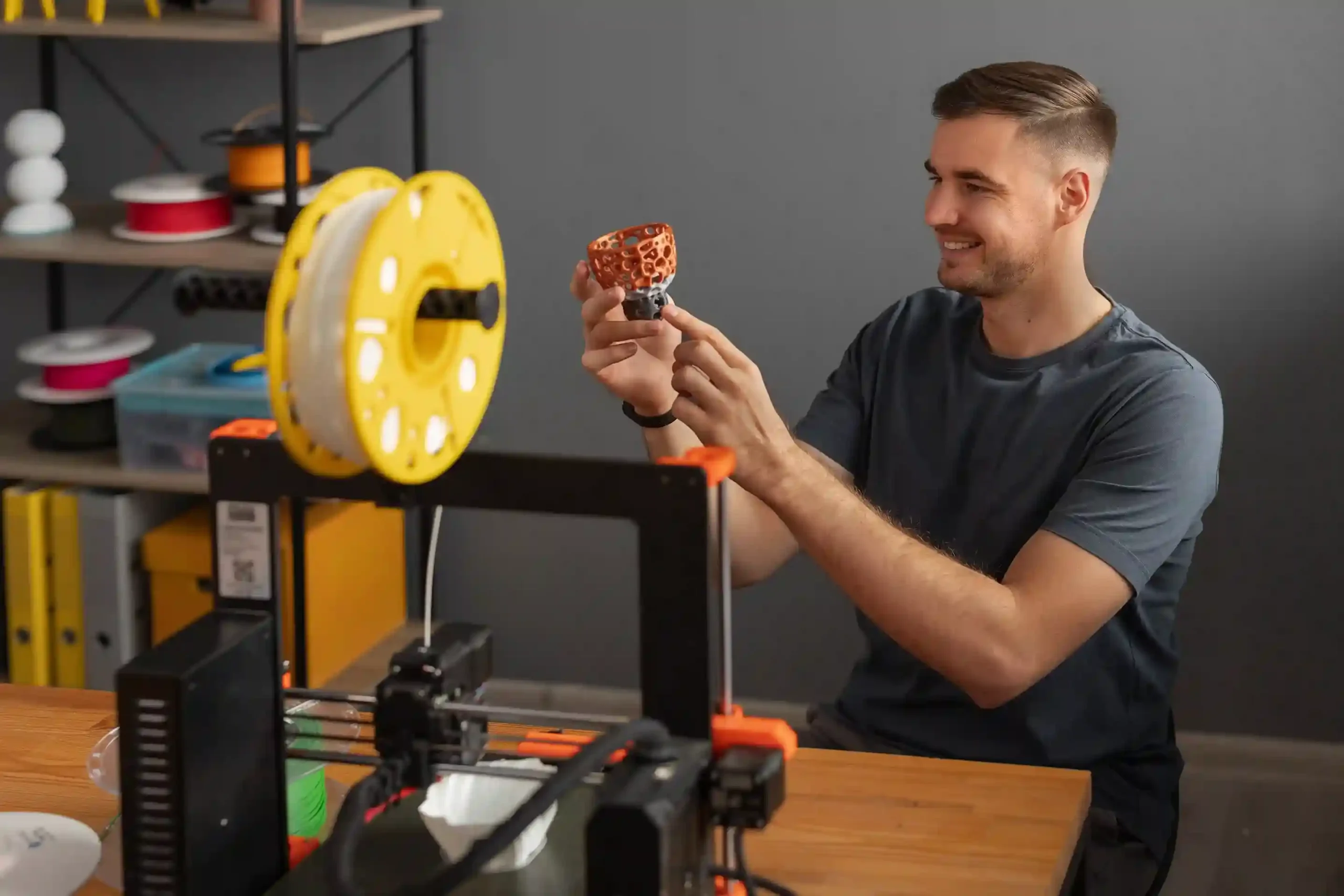
Many designs are rejected by traditional manufacturers because they are too intricate. Internal channels, lattice structures, organic curves, or lightweight structural components can be difficult or impossible to machine conventionally.
3D printing thrives on complexity. In fact, complex designs often cost the same to print as simple ones, because the process builds parts layer by layer directly from digital files.
This allows businesses to innovate freely, optimize product performance, reduce material usage, and improve strength-to-weight ratios — without increasing production difficulty.
Making Low-Volume Production Viable
Small batch manufacturing is often where ideas stall. If you only need 50 or 200 units, traditional production becomes inefficient and costly.
With 3D printing, low-volume production is not only possible — it’s practical. Businesses can launch limited product runs, test market response, or fulfill niche demands without committing to large inventories.
Pacio Group supports businesses with scalable 3D printing services, enabling them to move from prototype to small production runs smoothly, without unnecessary risk.
Faster Iterations Mean Smarter Decisions
When suppliers say “not possible,” it often reflects inflexibility in adapting to design changes. Every revision in traditional manufacturing can mean additional costs, new tooling, or delayed timelines.
With 3D printing, design updates are as simple as modifying the digital file and reprinting. This rapid iteration process empowers businesses to test, refine, and perfect their products before committing to large-scale manufacturing.
It reduces errors, improves performance, and significantly lowers development risk.
Recreating What No Longer Exists
Another common situation is when a component is discontinued or unavailable. Machinery parts, custom brackets, specialty housings — once suppliers stop producing them, businesses are left with limited options.
Through reverse engineering and digital modeling, these components can be recreated and printed locally. This extends the lifespan of equipment and eliminates dependency on hard-to-source imports.
Many businesses now turn to professional 3d printing companies in Dubai when replacement sourcing becomes impossible through conventional supply chains.
Supporting Startups and Growing Brands
Startups often hear “not possible” because their order quantities are too small to interest large manufacturers. Yet these early stages are when innovation matters most.
3D printing levels the playing field. Entrepreneurs can produce prototypes, functional models, and even end-use parts without massive upfront investment.
This allows growing brands to validate ideas, attract investors, and enter markets faster — all without the burden of high tooling costs.
From Concept to Completion — How Pacio Group Makes It Possible
At Pacio Group, we understand that businesses don’t just need production — they need solutions. Our 3D printing services are designed to transform challenges into opportunities.
From initial consultation to material selection, design optimization, and final production, we guide clients through every stage. Whether you need a single functional prototype, a custom-engineered component, or a small batch of production-ready parts, our team ensures quality, precision, and reliability.
We work closely with clients to refine designs for manufacturability, recommend suitable materials, and ensure that final outputs meet both functional and aesthetic requirements.
Beyond Prototyping: Real-World Applications
While many associate 3D printing with prototypes, its capabilities extend much further. Businesses are now using it for:
- Functional industrial components
- Architectural models
- Custom display elements
- Product housings and enclosures
- Tooling aids and fixtures
- Short-run production parts
This versatility makes 3D printing not just a backup solution — but a strategic manufacturing advantage.
Turning “Impossible” Into Competitive Advantage
When competitors accept supplier limitations, forward-thinking companies look for alternatives. By embracing 3D printing, businesses gain flexibility, speed, and design freedom that others may lack.
Instead of hearing “not possible,” you gain the confidence to ask, “How can we make this better?”
Innovation often starts where traditional manufacturing ends.
Final Thoughts
If suppliers are telling you your design is too complex, your order is too small, or your timeline is unrealistic, it may not be the project that’s impossible — it may be the method.
3D printing removes the traditional barriers that restrict innovation and growth. It enables businesses to create custom solutions, produce limited runs, refine designs quickly, and bring ideas to life without excessive cost or delay.
Pacio Group’s professional 3D printing services are built to help businesses move beyond limitations and unlock new possibilities. When others say “no,” we help you find a way forward — efficiently, reliably, and locally.
Because sometimes, the only thing standing between impossible and possible is the right technology — and the right partner.